
Smart health technology has changed the way people monitor their fitness and wellness. Instead of relying only on body weight, today’s connected health devices can provide insights into body composition, muscle mass, body fat, hydration, metabolic indicators and other health-related measurements.
Two products that stand out in this category are Hume Health’s Body Pod and Withings Body Scan. Both are designed to provide more information than a traditional weighing scale, but they take different approaches to helping users understand their health.
For people primarily interested in body composition, fitness progress, fat loss, muscle gain and personalized wellness insights, Hume Health deserves a particularly close look.
What Is Hume Health?
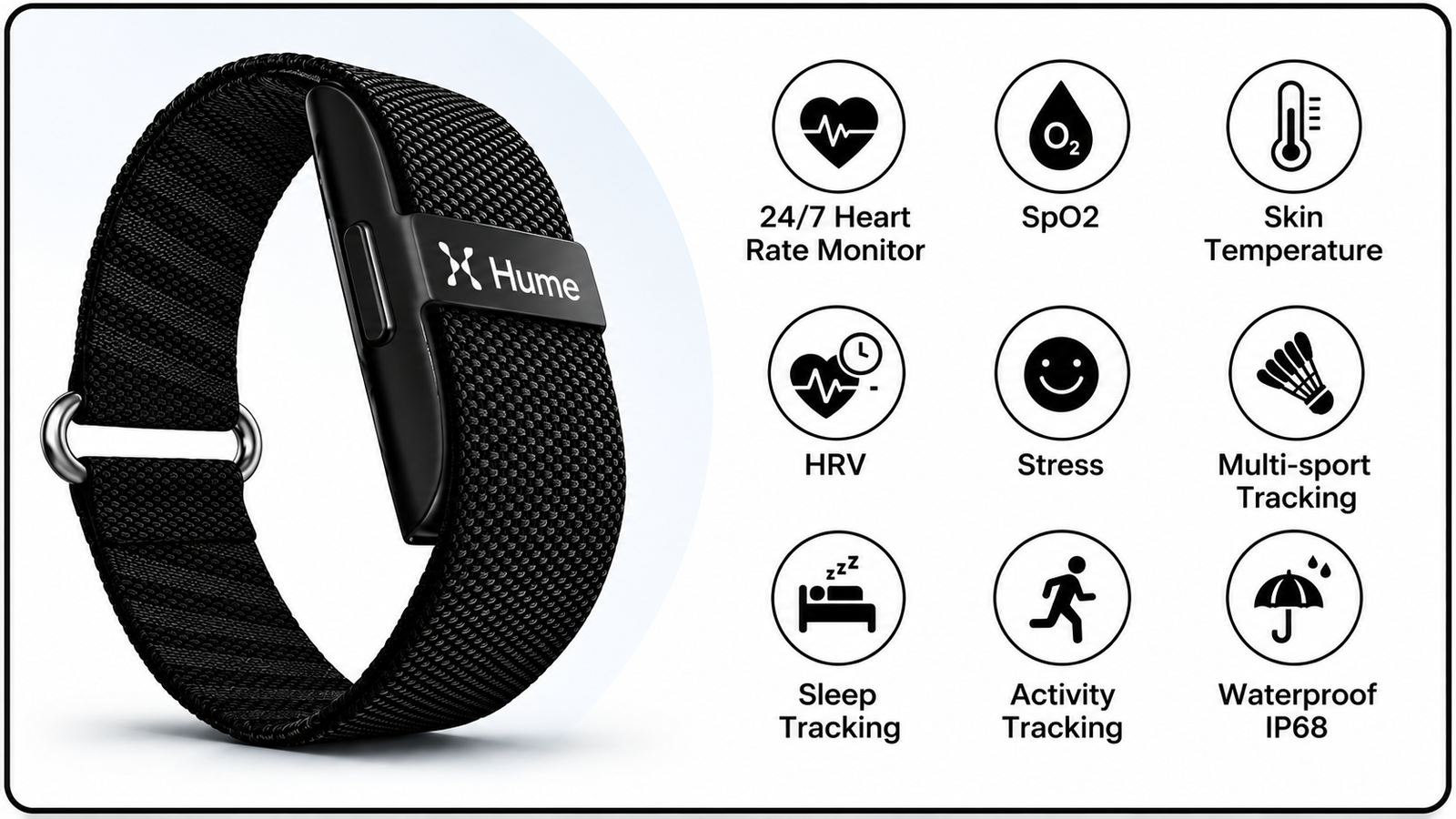
Hume Health is a connected health platform focused on helping users understand their body and track progress over time. Its ecosystem combines hardware such as the Hume Body Pod and Hume Band with the Hume Health app.
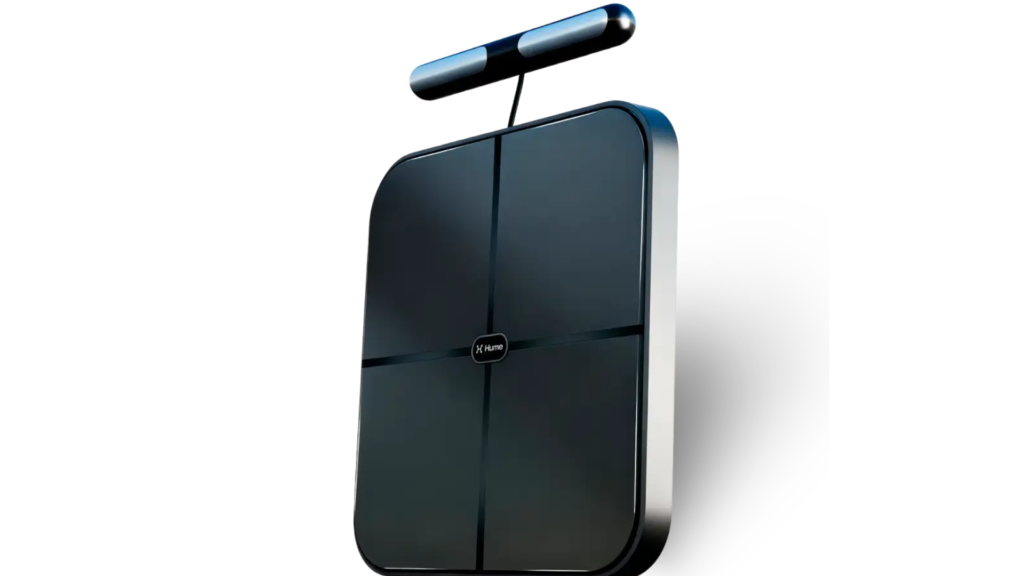
The Hume Body Pod is designed to measure 45+ body metrics, including body fat, muscle mass, visceral fat, hydration, bone density, metabolic age and segmental measurements. Hume says its Body Pod uses multi-frequency BIA technology and can provide readings for the arms, legs and torso.
Rather than focusing solely on the number displayed on a scale, Hume’s approach is centered around understanding what is changing inside the body.
That can be particularly useful for someone who is exercising regularly. For example, if your weight remains relatively stable while body fat decreases and muscle mass increases, a conventional scale may not make that progress obvious. Hume’s body-composition tracking is designed to provide a more detailed picture.
Hume Body Pod: More Than a Smart Scale
One of Hume Health’s biggest strengths is the amount of body-composition information it aims to provide from a home device.
The Body Pod tracks 45+ metrics, including:
- Body fat percentage
- Muscle mass
- Skeletal muscle
- Visceral fat
- Hydration
- Bone density
- Metabolic age
- BMR
- Segmental body composition
- Health-related trend data
Hume says the Body Pod can analyze the left arm, right arm, torso, left leg and right leg separately, allowing users to see where muscle and fat are distributed rather than relying only on a whole-body average.
This segmental approach can make Hume particularly appealing to fitness enthusiasts, athletes and people following structured weight-loss or muscle-building programs.
Hume Health App and Personalized Insights
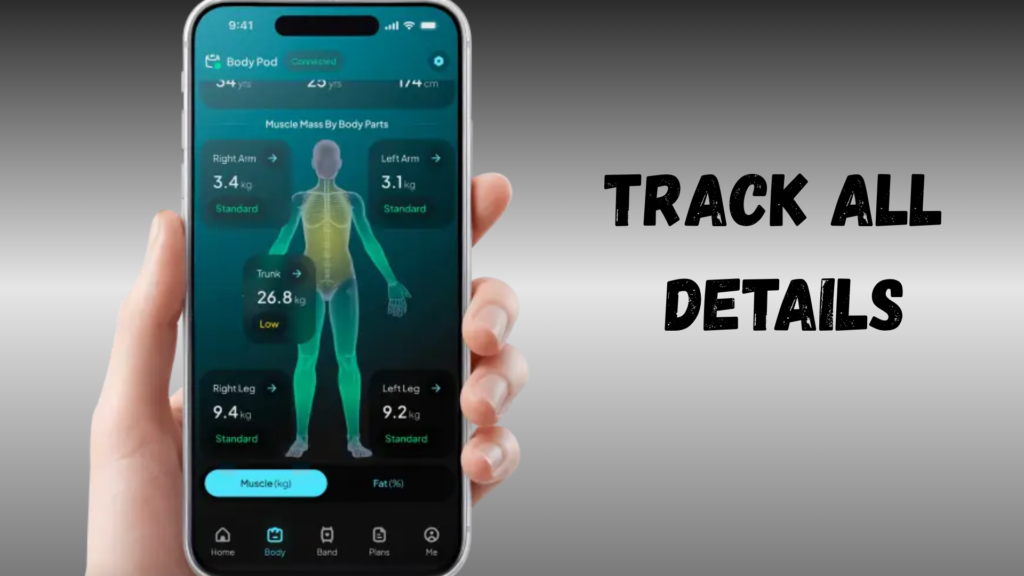
The hardware is only one part of the Hume Health ecosystem. The Hume app is designed to bring the data together and help users understand their trends.
Hume says the app can connect data from its devices and provide insights around body composition, recovery, sleep, activity and nutrition. Its premium Hume+ offering adds features such as personalized coaching, nutrition tracking, AI-powered insights and weekly health reports.
This is an important distinction because collecting health data is only useful if users can understand it.
Instead of simply seeing multiple numbers, Hume aims to turn those measurements into understandable trends and actionable information. Users can monitor changes over weeks and months rather than becoming overly focused on daily fluctuations.
How Does Withings Body Scan Compare?
Withings Body Scan is another premium connected health device aimed at consumers who want more advanced measurements at home.
It offers segmental body composition, allowing users to examine fat and muscle distribution across different areas of the body. Withings says its Body Scan can provide measurements across five body zones and offers 40+ health biomarkers.
However, Withings takes a somewhat broader approach to health monitoring.
The Body Scan includes cardiovascular-related features such as a 6-lead ECG and Vascular Age, along with measurements related to heart health. Withings says its ECG feature can screen for atrial fibrillation, while Vascular Age is based on pulse-wave velocity measurements.
This makes Withings an interesting alternative for consumers who want cardiovascular monitoring alongside body composition.
Hume Health vs. Withings Body Scan
| Feature | Hume Health Body Pod | Withings Body Scan |
|---|---|---|
| Weight tracking | ✓ | ✓ |
| Body fat | ✓ | ✓ |
| Muscle mass | ✓ | ✓ |
| Visceral fat | ✓ | ✓ |
| Hydration | ✓ | ✓ |
| Bone-related metrics | ✓ | ✓ |
| Metabolic metrics | ✓ | ✓ |
| Segmental body composition | ✓ | ✓ |
| Health app | ✓ | ✓ |
| Personalized insights | ✓ | ✓ |
| 6-lead ECG | — | ✓ |
| Vascular Age | — | ✓ |
| Cardiovascular-focused features | Limited | Stronger |
Withings clearly has an advantage if ECG and cardiovascular monitoring are the primary priorities. Its Body Scan is positioned as a broader connected health station rather than simply a body-composition device.
But that does not automatically make it the better choice for everyone.
Why Hume Health Could Be the Better Choice for Fitness Tracking
For people whose main objective is improving body composition, Hume Health has a compelling proposition.
Imagine someone following a strength-training program. Their overall weight may not change significantly because they are simultaneously gaining muscle and losing fat. A traditional scale might suggest that very little is happening.
Hume’s focus on multiple body-composition measurements can provide a more detailed view of that progress.
The same applies to someone trying to lose weight. Rather than watching only the number on the scale, users can monitor trends in body fat, muscle mass, visceral fat and other metrics.
Hume also puts considerable emphasis on interpreting the data. Its app is designed to help users understand whether their habits are moving them in the right direction.
That combination of measurement + tracking + interpretation is one of Hume’s strongest selling points.
Hume Health for Long-Term Progress
Another advantage of a connected health ecosystem is the ability to monitor trends over time.
Daily measurements can naturally fluctuate because of hydration, food intake, exercise and other factors. Looking at longer-term trends can therefore provide a more useful picture than focusing on a single day’s reading.
Hume emphasizes weekly and monthly progress tracking, helping users see changes in areas such as fat loss and muscle development.
For people who are serious about fitness, this can make progress easier to visualize and potentially make it easier to stay motivated.
Which One Should You Choose?
The answer ultimately depends on what you want from a smart health device.
Choose Hume Health if you primarily want:
- Detailed body-composition tracking
- Muscle and fat monitoring
- Segmental body measurements
- Fitness and weight-management insights
- Long-term progress tracking
- Personalized health and wellness guidance
- An ecosystem focused heavily on body composition and lifestyle
Choose Withings Body Scan if you primarily want:
- Body-composition tracking
- Segmental measurements
- Cardiovascular-focused measurements
- ECG functionality
- Vascular Age
- A broader connected-health platform
Withings offers some impressive health-monitoring capabilities, particularly around cardiovascular measurements. However, Hume Health stands out for consumers whose primary goal is understanding body composition and making measurable progress with fitness, nutrition and weight-management goals.
Final Verdict: Hume Health vs. Withings
Both Hume Health and Withings Body Scan are significantly more advanced than traditional smart scales. They provide users with a broader range of information and can help turn everyday measurements into longer-term health and fitness trends.
Withings Body Scan has a strong advantage for users specifically looking for ECG and cardiovascular-focused features.
Hume Health, however, is particularly compelling for fitness-focused consumers who want detailed body-composition tracking combined with an app designed to interpret their data and provide personalized guidance.
With its 45+ body metrics, segmental body-composition measurements, progress tracking and broader Hume ecosystem, Hume Health offers a strong solution for people who want to go beyond simply asking, “How much do I weigh?” and instead understand how their body is changing over time.