
Have you ever stepped on a weighing scale, noticed that your weight has barely changed, and wondered whether your diet and exercise routine are actually working?
You are not alone. Many people use body weight as their primary measure of health and fitness progress. However, weight is only one part of the bigger picture.
Your body is made up of different components, including fat, muscle, water, and bone. Changes in these components can influence your health and fitness goals, even when the number on the scale stays relatively stable.
For example, someone following a strength-training program might gain muscle while losing body fat. Their overall weight may change very little, despite meaningful changes in body composition.
This is where smart body composition monitors can be useful.
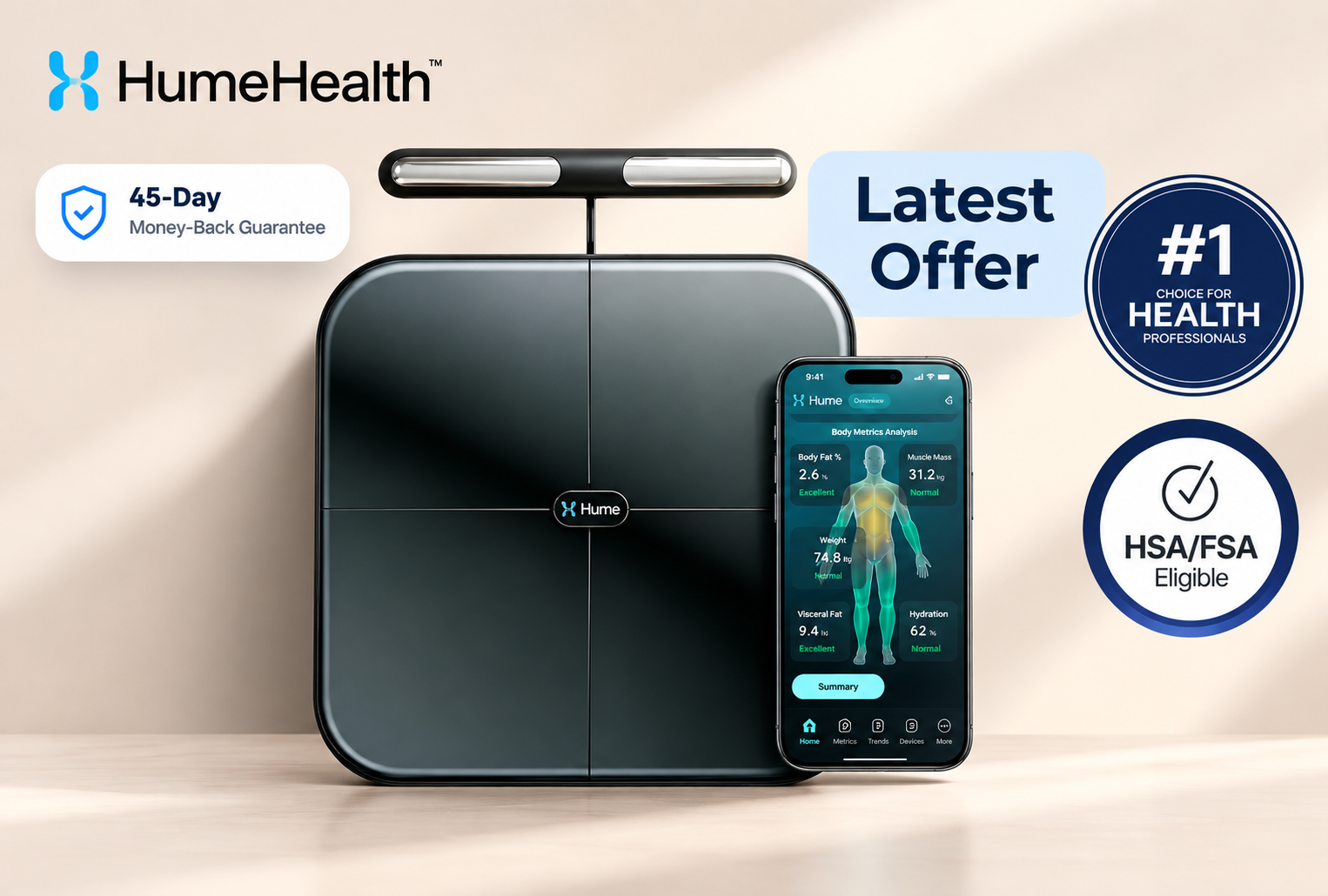
Modern health technology allows people to measure and track several body metrics at home. Products such as the Hume Pod by Hume Health combine body composition measurements with an app that helps users review their progress over time.
But what exactly is body composition, how do smart monitors work, and are they worth considering for your wellness routine?
In this guide, we will explore everything you need to know about body composition tracking, its potential benefits, its limitations, and how to choose a suitable device for your needs.
1. What Is Body Composition?
Body composition refers to the different components that make up your body.
Although body weight is easy to measure, it does not tell you exactly how much of your weight comes from fat, muscle, water, or other tissues.
Two people can have the same body weight but very different body compositions.
For example, one person may have greater muscle mass, while another may have a higher proportion of body fat. Their measurements, fitness levels, and nutritional needs may differ despite having the same weight.
Several components are commonly considered when evaluating body composition.
Body Fat
Body fat plays important roles in energy storage, hormone function, insulation, and the protection of internal organs.
However, excessive body fat, particularly when it accumulates around internal organs, can be associated with certain health risks.
Body fat measurements can help people understand changes in their body composition as they adjust their eating habits and physical activity.
Muscle Mass
Muscles support movement, strength, balance, and everyday physical activities.
Maintaining muscle mass is particularly important as people age. Strength training, adequate nutrition, and sufficient recovery can help support muscle health.
Tracking muscle-related measurements may be useful for people following resistance-training programs or working toward specific fitness goals.
Body Water
Water is essential for temperature regulation, circulation, digestion, and numerous other bodily functions.
Hydration levels can influence body weight and some body composition estimates. This is one reason measurements can fluctuate from one day to another.
Bone-Related Measurements
Bone health is another important part of overall wellness.
Some smart body composition devices estimate bone-related metrics. However, these estimates should not be confused with a clinical bone-density examination used to assess conditions such as osteoporosis.
Understanding these distinctions can help you interpret health measurements more realistically.
2. Why Tracking Weight Alone May Not Be Enough
A traditional weighing scale provides a simple and useful measurement. However, it cannot explain every change happening in your body.
Consider someone who begins exercising regularly and following a balanced diet.
Over several weeks, that person might lose some body fat while gaining muscle. Their weight could remain nearly unchanged, making it difficult to recognize progress through weight measurements alone.
Similarly, short-term weight increases can occur because of fluid retention, changes in carbohydrate intake, meals, or other normal fluctuations.
This does not necessarily mean that a person has gained body fat.
Tracking additional metrics can provide more context.
For example, someone following a fitness program may want to monitor:
- Changes in estimated body fat percentage.
- Trends in muscle-related measurements.
- Changes in body weight over time.
- Estimated body water levels.
- Progress toward a specific fitness goal.
These measurements can help people evaluate their routines more thoughtfully instead of reacting to every change on the scale.
Nevertheless, no single measurement provides a complete picture of health. Fitness, nutrition, sleep, medical history, blood pressure, and other factors can also be important.
The most useful approach is to combine appropriate measurements with sustainable habits and professional guidance when needed.
3. What Is a Smart Body Composition Monitor?
A smart body composition monitor is a device designed to estimate body weight and additional body composition metrics.
Unlike a basic weighing scale, some models use electrical measurements to estimate characteristics such as body fat percentage, muscle mass, and body water.
Many devices also connect to a smartphone application, allowing users to view their measurements and follow changes over time.
The Hume Pod by Hume Health is one example of this type of product.
According to the manufacturer’s product information, the Hume Pod uses multi-frequency bioelectrical impedance analysis and sensors in the scale and handle to estimate multiple body composition metrics.
Its connected app allows users to review their measurements and progress trends.
The purpose of this technology is to provide more information than a single body-weight reading.
However, it is important to understand that the device estimates body composition rather than directly measuring every tissue in the body.
Results may also be influenced by hydration, recent meals, exercise, and measurement conditions.
For that reason, consistency and realistic interpretation are essential.
4. How Does Bioelectrical Impedance Analysis Work?
Bioelectrical impedance analysis, commonly called BIA, is a method used by many body composition devices.
The technology works by passing a very small electrical current through the body and measuring how the body responds to it.
Different tissues conduct electrical current differently. Water-rich tissues generally conduct electricity more easily than tissues containing less water.
The device uses electrical measurements together with an estimation method to calculate body composition metrics.
Some advanced devices use multiple electrical frequencies to gather additional information.
Other models incorporate sensors that allow measurements to be estimated across different body segments.
Although BIA technology is widely used in consumer wellness products, its results are not identical to a direct measurement of body fat or muscle.
Individual factors, including hydration, body characteristics, and measurement conditions, can affect estimates.
A smart monitor is therefore best viewed as a tool for tracking trends rather than an unquestionable source of precise medical information.
If you need a clinical assessment of body composition or have a medical condition that affects fluid balance, consult an appropriate healthcare professional.
5. Hume Health: Understanding the Hume Pod
Hume Health offers technology designed to help people monitor body composition and related wellness measurements.
Its Hume Pod is designed for home use and combines a weighing platform, handheld sensors, and a connected smartphone app.
According to the official product information, the device can track multiple metrics, including body fat, muscle-related measurements, body water, and other body composition indicators.
The app provides a way to review measurements and monitor changes over time.
You can explore the product specifications and current features on the official Hume Health website.
Key Features to Understand
Multiple body composition metrics
Instead of focusing exclusively on body weight, the Hume Pod is designed to provide estimates of several body composition measurements.
This may be useful for people interested in monitoring changes associated with exercise and nutrition.
Connected smartphone app
The device works with the Hume Health app, which allows users to review their measurements and follow progress over time.
Progress tracking
Looking at measurements across several weeks or months can help users identify trends that are not obvious from individual readings.
Personalized wellness insights
Hume Health describes app features intended to help users interpret their measurements and make informed lifestyle decisions.
The availability of specific coaching, reporting, and advanced features may depend on the product version and subscription plan.
Home convenience
Having a body composition monitor at home may make it easier to collect measurements under similar conditions without repeatedly arranging external assessments.
These features may appeal to people who prefer data-driven approaches to fitness and wellness.
However, the value of a device ultimately depends on whether its measurements and features support your actual goals.
6. Who May Benefit From a Smart Body Composition Monitor?
Smart body composition monitors may be useful for different people, although they are not essential for everyone.
Fitness Enthusiasts
People who regularly exercise may want to understand how their body composition changes as their training routine develops.
Tracking estimated muscle and fat measurements can provide additional context when weight changes are limited.
People Working Toward Weight Management Goals
Someone trying to manage their weight may find it helpful to track longer-term patterns rather than concentrating exclusively on daily scale readings.
Body composition estimates can offer additional information, although they should not replace professional guidance when weight management involves medical concerns.
Strength-Training Beginners
People beginning resistance training often focus on strength, endurance, and muscle development.
A body composition monitor may provide supplementary information about changes over time.
However, improvements in lifting ability, physical performance, and consistency are also meaningful indicators of progress.
People Interested in Long-Term Wellness
Some individuals enjoy tracking their daily habits and health-related measurements.
A smart monitor may help them observe trends and maintain an organized record of selected metrics.
It is important to remember that collecting more data does not automatically lead to better health. Measurements are most useful when they support sensible decisions.
7. How to Get More Consistent Body Composition Readings
If you decide to use a smart body composition monitor, following a consistent measurement routine can make your results easier to interpret.
Measure at a Similar Time
Body weight and hydration can change throughout the day.
Measuring under similar conditions, such as in the morning, can help reduce some sources of variation.
Follow the Manufacturer’s Instructions
Use the device according to its instructions, including guidance about positioning, sensor contact, and safe operation.
Avoid Comparing Unrelated Measurements
A reading taken after exercise may differ from one taken after resting.
Try to compare measurements collected under similar conditions rather than assuming every difference represents a genuine change in body fat or muscle.
Look at Longer-Term Trends
Daily fluctuations are normal.
Instead of becoming concerned about a single reading, review patterns across several weeks.
Longer-term trends are generally more useful for understanding progress than isolated measurements.
Keep Your Routine Consistent
Changes in exercise, eating patterns, sleep, and hydration can affect your measurements.
Recording these habits alongside your results may help you understand why certain readings change.
Most importantly, do not allow measurements to become a source of unnecessary stress. If frequent weighing affects your mental well-being, consider reducing how often you measure or discussing your concerns with a qualified professional.
8. Can Smart Body Composition Monitors Help With Weight Management?
Smart body composition monitors can provide information that may support a structured weight management routine.
For example, a person following an exercise program might use measurements to review trends in body weight and estimated body fat.
However, a device does not independently cause fat loss, build muscle, or improve metabolic health.
Those outcomes depend on multiple factors, including nutrition, physical activity, sleep, genetics, medical conditions, and consistency.
A practical weight management routine may include:
- Eating a balanced diet that meets your nutritional needs.
- Engaging in regular physical activity.
- Incorporating strength training when appropriate.
- Getting sufficient sleep.
- Managing stress.
- Seeking professional support when needed.
A body composition monitor can supplement these habits by providing additional information.
It should not be used to justify extreme dieting, excessive exercise, or changes to prescribed treatment.
People with medical conditions affecting fluid balance, or those for whom electrical impedance measurements may be inappropriate, should consult a healthcare professional and follow the manufacturer’s safety guidance before using such devices.
9. What Should You Consider Before Buying a Smart Scale?
Not every smart scale offers the same features, measurement methods, or app experience.
Before purchasing a device, consider the following factors.
1. Measurement capabilities
Check which metrics the device estimates and whether those measurements are relevant to your goals.
Do not assume that a device measuring more metrics necessarily provides more accurate or more useful information.
2. Measurement method
Understand whether the device uses basic foot sensors, handheld sensors, or a combination of measurement points.
Different designs can produce different estimates.
3. App compatibility
Confirm that the accompanying app supports your smartphone and offers the features you expect.
If you already use a fitness tracker or health application, check whether the device supports the integrations you need.
4. Ease of use
A device should be straightforward to set up and use consistently.
Consider the display, app interface, charging requirements, and the time required to complete a measurement.
5. Data privacy
Health measurements can be personal information.
Review the company’s privacy policy to understand how your data is collected, stored, used, and shared.
6. Price and subscription costs
Compare the initial device price with any recurring subscription charges.
Check which features are included without a paid plan and which require an additional subscription.
7. Returns and warranty
Read the current return policy, warranty terms, and customer support information before making a purchase.
These details can change, so verify them directly with the manufacturer.
Taking time to compare these factors can help you select a product that suits your needs and budget.
10. Is the Hume Pod Worth Considering?
Whether the Hume Pod is worth considering depends on your goals and preferences.
It may be appealing if you want a home-based device that combines body composition estimates with app-based tracking.
Its multiple measurement capabilities may be particularly interesting to people who want to monitor more than body weight during a fitness or wellness routine.
On the other hand, someone who only needs to monitor body weight may find a conventional weighing scale sufficient.
It is also important to recognize the limitations of consumer body composition technology.
Estimates are not interchangeable with every clinical assessment, and a smart monitor cannot diagnose medical conditions simply by displaying body composition measurements.
Before purchasing, review the current product specifications, pricing, compatibility, subscription options, safety instructions, and return policy.
You can find more information about the device directly on the manufacturer’s website.
Explore Hume Health: Visit the official Hume Health website to review the Hume Pod and determine whether its features align with your needs.
Conclusion
Understanding your body involves more than looking at a number on a weighing scale.
Body composition measurements can provide additional context about estimated body fat, muscle-related metrics, and other aspects of your physical makeup.
Smart body composition monitors make it possible to collect these measurements at home and review trends through connected applications.
Products such as the Hume Pod offer an option for people interested in combining home measurements with digital health tracking.
However, these devices work best as supplementary tools. They cannot replace balanced nutrition, regular physical activity, sufficient sleep, or professional medical care.
If you are considering a smart body composition monitor, start by identifying the information you actually need. Compare measurement methods, app features, costs, and privacy policies before making your decision.
Ultimately, the goal is not to collect as many health metrics as possible. It is to use appropriate information to make informed, sustainable choices that support your overall well-being.
Frequently Asked Questions
1. What is the difference between body weight and body composition?
Body weight measures your total weight, while body composition describes the different components that make up your body, such as fat, muscle, water, and bone.
2. How often should I use a body composition monitor?
Follow the manufacturer’s guidance and choose a frequency that supports your goals without creating unnecessary stress. Consistent conditions and longer-term trends are more useful than reacting to every daily fluctuation.
3. Are smart body composition scales completely accurate?
No consumer device should be assumed to provide perfectly accurate estimates for every individual. Results can vary depending on the measurement method, hydration, body characteristics, and other factors.
4. Can a smart scale tell me whether I am healthy?
No. Body composition measurements provide only part of the picture. Overall health depends on many factors, and medical concerns require appropriate professional assessment.
5. Does the Hume Pod work with a smartphone?
According to Hume Health’s product information, the Hume Pod connects with its smartphone app to display measurements and track progress. Check the current specifications for compatibility and available integrations.
6. Should I buy a body composition monitor for weight loss?
It depends on your needs. Some people appreciate having additional measurements, while others prefer a simple weighing scale. A monitor is optional and should support, rather than replace, sustainable lifestyle habits.