
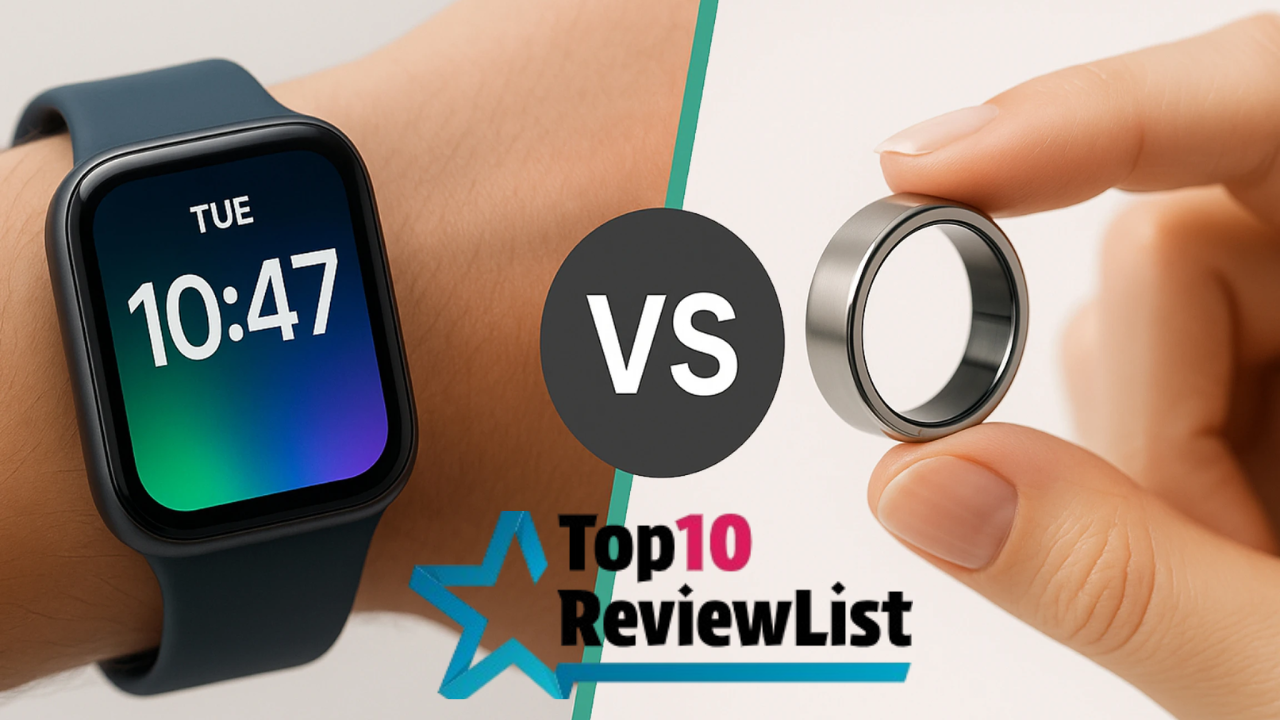
Smart Ring vs. Smartwatch: Which Is Better for Fitness Tracking?
Wearable technology has transformed how people monitor their health, and two devices now dominate the conversation: the smart ring and the smartwatch. Both promise to track your heart rate, sleep, activity, and recovery, but they take very different approaches. If you’re trying to decide which one deserves a spot on your body, this guide breaks down everything you need to know from accuracy and comfort to battery life and price, so you can make a confident, informed choice.
Introduction: Two Devices, One Goal
The rise of health-conscious consumers has fueled explosive growth in the wearable tech market. What used to be a simple pedometer has evolved into two distinct product categories, each with passionate followings. Smart rings, popularized by brands like Oura and Ultrahuman, offer a minimalist, jewelry-like design that tracks your body around the clock without ever feeling intrusive. Smartwatches, led by names like Apple, Garmin, and Samsung, pack a screen, apps, notifications, and a full suite of sensors into a device worn on your wrist.
The core question isn’t which device is “better” in a vacuum – it’s which one is better for you, based on your goals, lifestyle, and how much you want technology to be part of your daily routine. This guide compares both categories across the metrics that matter most for health tracking.
How Smart Rings Work
Smart rings are compact, battery-powered devices worn on a finger, typically embedded with photoplethysmography (PPG) sensors, infrared LEDs, temperature sensors, and accelerometers. Because the finger has strong, consistent blood flow and the ring sits snugly against the skin, many manufacturers argue this location produces more stable, less noisy readings than the wrist -especially during sleep, when movement is minimal.
Smart rings are designed to be worn continuously, day and night, without needing to be removed for showering, swimming, or workouts (in most cases). Their small size means there’s no screen, no buttons in some models, and no haptic buzzing for notifications. All data is synced to a companion smartphone app, where users review scores for sleep, readiness, and activity.
Key Strengths of Smart Rings
- Comfort for 24/7 wear: Because they’re small and lightweight, most users forget they’re even wearing one, which encourages consistent, uninterrupted data collection – especially valuable for sleep tracking.
- Sleep tracking accuracy: The finger’s stable blood flow and minimal nighttime movement often result in more reliable sleep-stage detection compared to wrist-based devices.
- Long battery life: Without a screen or constant notifications draining power, most smart rings last 4–7 days per charge.
- Discreet design: Smart rings look like ordinary jewelry, appealing to users who don’t want visible tech on their wrist.
- Recovery-focused metrics: Many rings emphasize daily “readiness” or “recovery” scores that combine sleep, heart rate variability (HRV), and resting heart rate into a single actionable number.
Limitations of Smart Rings
- No display: You can’t glance at your ring to check your heart rate or see a notification; everything requires opening an app.
- Limited workout tracking: Rings generally lack GPS and detailed exercise-specific metrics like pace, route mapping, or real-time coaching cues.
- Sizing challenges: Unlike a watch with an adjustable band, rings require precise sizing, and finger swelling (from heat, exercise, or time of day) can affect fit and reading accuracy.
- Fewer app integrations: While improving, most rings offer a narrower ecosystem of third-party app connections compared to smartwatches.
How Smartwatches Work
Smartwatches combine health sensors with a full computing platform. Alongside heart rate monitors, accelerometers, and often blood oxygen (SpO2) sensors, smartwatches include a display, GPS, cellular or Wi-Fi connectivity, app support, and interactive features like notifications, calls, and voice assistants.
For health tracking specifically, smartwatches use wrist-based PPG sensors to estimate heart rate, and many higher-end models now include ECG capability, skin temperature sensors, and even blood pressure estimation features. Because they’re worn on the wrist, they benefit from a larger surface area for sensors and batteries, enabling more advanced features than a ring can currently support.
Key Strengths of Smartwatches
- All-in-one functionality: Beyond health tracking, smartwatches handle notifications, music, payments, calls, and app-based productivity – replacing several devices at once.
- Superior workout tracking: Built-in GPS, multiple sport modes, and real-time metrics make smartwatches the clear choice for runners, cyclists, and athletes who want detailed performance data during exercise.
- At-a-glance display: You can check your stats, respond to messages, or see your heart rate instantly without pulling out your phone.
- Broader ecosystem support: Smartwatches typically support more third-party apps, custom watch faces, and integrations with fitness platforms.
- Advanced health features: Many newer models offer ECG readings, fall detection, and emergency SOS calling – features not yet available in rings.
Limitations of Smartwatches
- Shorter battery life: Most smartwatches need daily or every-other-day charging, especially with always-on displays or GPS use, which can create gaps in continuous data – particularly overnight.
- Bulkier and more noticeable: The larger form factor can be uncomfortable for some users during sleep, leading many people to simply not wear them at night.
- Sleep tracking inconsistencies: Wrist movement and looser fit compared to a ring can occasionally reduce the accuracy of sleep-stage detection.
- Higher price point: Feature-rich smartwatches, especially those with cellular connectivity, tend to cost more than most smart rings.
Head-to-Head Comparison
| Feature | Smart Ring | Smartwatch |
|---|---|---|
| Comfort for 24/7 wear | Excellent | Moderate |
| Sleep tracking accuracy | Very strong | Good |
| Battery life | 4–7 days | 1–3 days (typical) |
| Display/notifications | None (app-only) | Yes, real-time |
| GPS & workout tracking | Limited | Extensive |
| Design discretion | High (looks like jewelry) | Moderate to low |
| App ecosystem | Growing, narrower | Broad, mature |
| Advanced health sensors (ECG, SpO2) | Emerging | Widely available |
| Typical price range | $250–$400 (plus possible subscription) | $200–$800+ |
| Best for | Sleep, recovery, passive tracking | Fitness performance, all-day utility |
Which Metrics Matter Most to You?
Choosing between a smart ring and a smartwatch often comes down to which health metrics you care about most.
If sleep and recovery are your top priority, a smart ring is generally the stronger pick. Its snug fit and finger placement tend to produce cleaner, less motion-affected data overnight, and the absence of a screen means you’re less likely to remove it before bed.
If you’re serious about workouts and performance tracking, a smartwatch is difficult to beat. Built-in GPS, sport-specific modes, and real-time metrics during a run, ride, or gym session give athletes far more actionable data mid-activity than a ring currently can.
If you want a single device that replaces your phone for notifications, payments, and calls, a smartwatch is the more practical option – rings are purely passive health trackers and don’t offer this kind of everyday utility.
If discretion and comfort are your priority, especially for people who dislike wearing anything bulky, a ring’s minimal, jewelry-like design is hard to match.
Accuracy: Does Location on the Body Matter?
Independent testing and user studies generally suggest that smart rings perform slightly better than smartwatches for resting heart rate and sleep-stage detection, largely due to the finger’s stable blood flow and minimal movement during rest. However, smartwatches tend to outperform rings during active movement, such as running or cycling, since their sensors and algorithms are specifically tuned for exercise conditions, and GPS adds crucial context that a ring cannot provide.
In short: rings tend to shine at rest, watches tend to shine in motion.
Price and Value Considerations
Smart rings often carry a lower upfront cost than premium smartwatches, but some brands require an ongoing monthly subscription to unlock full health insights, which can add up over time. Smartwatches vary widely in price – budget fitness-focused models can be affordable, while flagship devices with cellular connectivity and advanced sensors can cost significantly more, though they typically don’t require a subscription for core features.
When calculating true cost, factor in not just the device price but also any recurring app or subscription fees, since this can shift the long-term value equation in either direction.
Frequently Asked Questions
Is a smart ring as accurate as a smartwatch for heart rate? For resting heart rate and overnight monitoring, smart rings are often just as accurate — sometimes more so — than smartwatches. During intense exercise, smartwatches with GPS and motion-optimized algorithms tend to be more reliable.
Can I wear a smart ring while swimming or showering? Most modern smart rings are water-resistant and safe for swimming and showering, though it’s important to check the specific water-resistance rating of your model before submerging it.
Do smart rings track workouts as well as smartwatches? No. Smart rings can detect general activity and elevated heart rate, but they lack GPS and the detailed, sport-specific metrics that smartwatches provide during structured workouts.
Which is better for sleep tracking, a ring or a watch? Smart rings generally offer more accurate and consistent sleep tracking due to their snug fit and the finger’s stable blood flow, along with higher compliance since users are more likely to wear them to bed.
Do smart rings require a subscription? Some do. Certain brands charge a monthly fee for full access to health insights and trends, while others include all features with the purchase price. Always check subscription requirements before buying.
Can I get notifications on a smart ring? Most smart rings do not support notifications, calls, or messages, since they lack a screen and speaker. If staying connected on your wrist matters to you, a smartwatch is the better choice.
Final Verdict
There isn’t a universal winner between smart rings and smartwatches – the right choice depends entirely on what you want a wearable to do for you. If your primary goal is passive, accurate tracking of sleep, recovery, and overall wellness without the distraction of notifications or a screen, a smart ring is likely the better fit. Its discreet design and long battery life make it easy to wear consistently, which is often the biggest factor in getting reliable long-term data.
On the other hand, if you’re an active individual who wants detailed workout metrics, real-time feedback, and a device that doubles as a communication and productivity tool, a smartwatch remains the more versatile choice. Many health-conscious users are increasingly choosing to use both – wearing a ring at night for sleep tracking and a watch during the day for workouts – to get the best of both worlds.
Ultimately, the best wearable is the one that fits seamlessly into your lifestyle and that you’ll actually wear consistently, since even the most accurate sensor is only useful if the device stays on your body.