
Introduction
Tracking fitness progress is about much more than watching the number on a weighing scale decrease. Your weight can remain the same while your body composition, muscle mass, and fitness habits change. That is why understanding your body’s overall progress can be more useful than focusing on weight alone.
Hume Health offers smart health-tracking technology designed to help users understand changes in their body composition and daily wellness. Its Hume Pod measures body composition metrics, while the Hume Band tracks selected activity, sleep, and recovery indicators. Together with the Hume Health app, these tools can help users monitor trends and make more informed fitness decisions.
In this guide, we will explain how to track fitness progress with Hume Health, explore important health metrics, and look at practical examples of using these measurements to support your fitness goals.
Why Fitness Progress Is More Than Weight Loss
Body weight includes muscle, fat, water, bone, and other tissues. As a result, changes on the scale do not always explain what is happening inside your body.
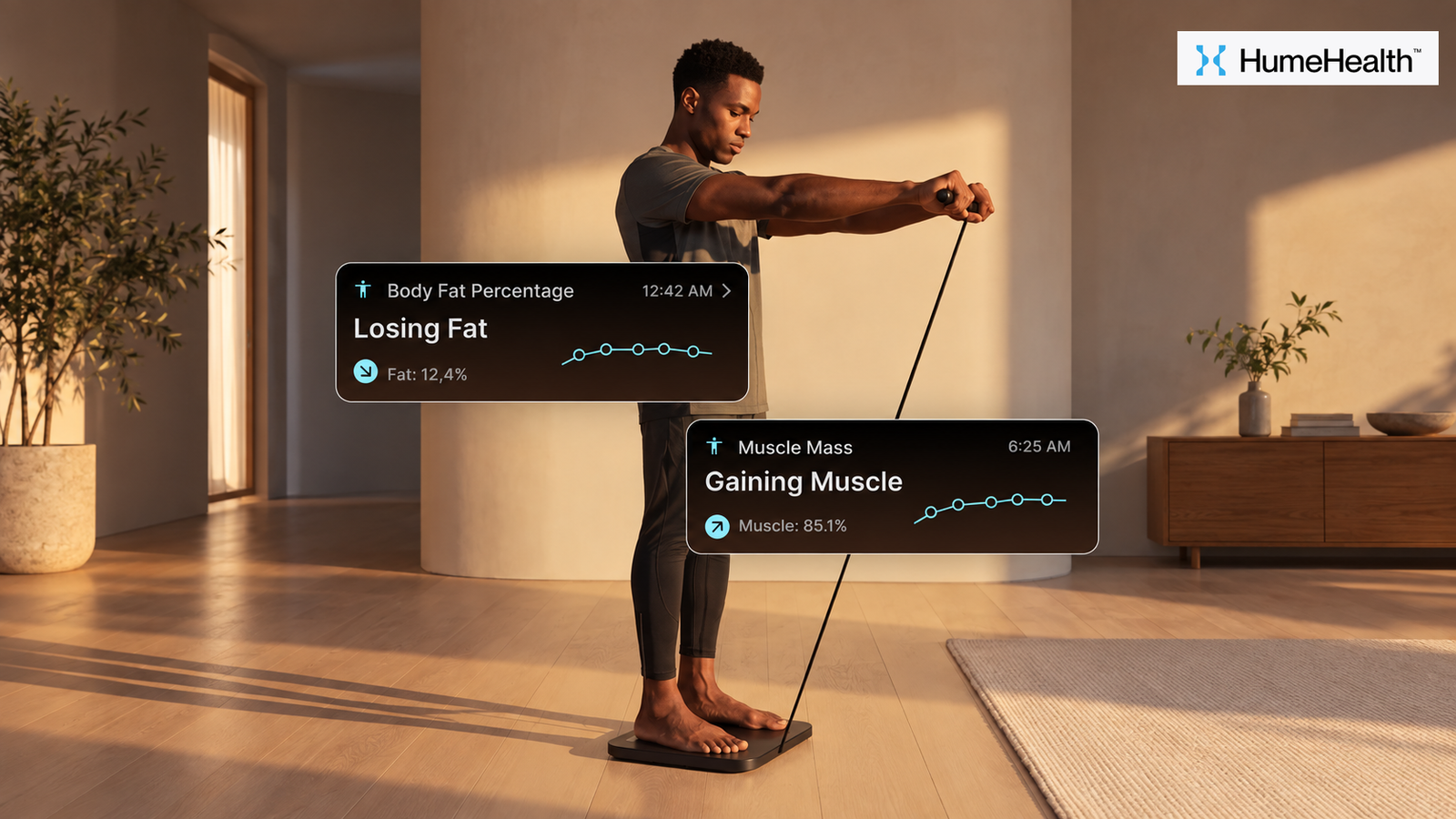
For example, someone who begins strength training may lose body fat while gaining muscle. Their total weight might remain relatively stable, even though their body composition is changing.
Similarly, short-term weight fluctuations can occur because of hydration, meals, and other everyday factors. A single reading may therefore provide an incomplete picture of progress.
Hume Health helps users look beyond weight by providing access to additional body composition and wellness measurements. Tracking these metrics consistently can offer a broader perspective on fitness progress.
Understanding Hume Health Metrics
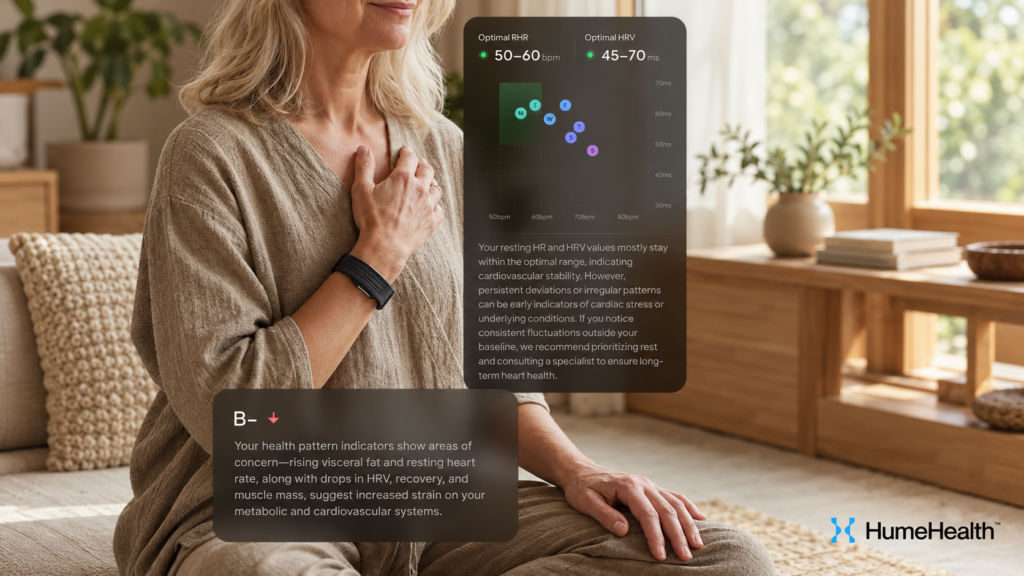
The Hume Pod tracks multiple body composition measurements, including body fat, muscle mass, hydration, and visceral fat. The Hume Band offers a different set of indicators related to activity, sleep, and recovery.
Here are some important metrics to understand.
1. Body Fat Percentage
Body fat percentage represents the proportion of your total body weight that consists of fat. It can help you understand changes in body composition over time.
Hume Health example: Imagine your body weight stays around 170 pounds for several weeks, but your Hume Pod readings show a gradual decline in estimated body fat percentage. This could suggest that your body composition is changing even though your weight remains stable.
For a more complete picture, review body fat alongside muscle mass and weight rather than interpreting one reading in isolation.
2. Muscle Mass and Skeletal Muscle
Muscle mass measurements help you monitor changes in your body’s muscular tissue. Skeletal muscle is particularly relevant to movement, strength, and physical performance.
Hume Health example: Suppose you start a resistance-training routine and your weight changes very little. Over several weeks, your Hume Pod reports a gradual increase in estimated muscle mass. This trend, combined with improvements in your lifting performance, may indicate that your training is supporting muscle development.
Remember that smart-scale muscle measurements are estimates, not direct measurements of muscle tissue.
3. Visceral Fat
Visceral fat is stored deep inside the abdomen around internal organs. Higher levels are associated with increased cardiometabolic health risks.
Hume Pod provides a visceral fat-related measurement that can help users monitor estimated changes over time.
Hume Health example: If improving your diet and maintaining regular physical activity becomes part of your routine, you can review your visceral fat readings over several weeks or months. Look for longer-term patterns rather than expecting major changes after a few workouts.
A consumer body-composition device cannot diagnose a medical condition. Discuss concerning results with a qualified healthcare professional.
4. Body Water and Hydration
Water levels influence body weight and can affect body-composition estimates. Changes in fluid balance may temporarily make it appear that your progress has slowed or reversed.
Hume Health example: Imagine your weight increases slightly after a salty meal or an intense workout. That change does not necessarily mean you have gained body fat. Reviewing hydration-related readings alongside your usual measurements may help you understand why your numbers fluctuate.
For reliable comparisons, measure under similar conditions and maintain normal hydration.
5. Segmental Body Composition
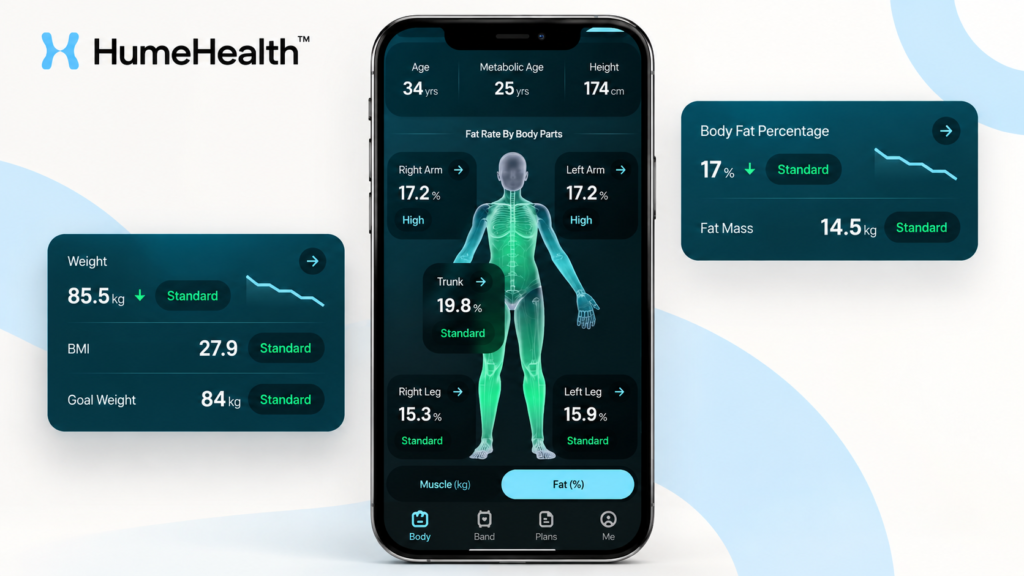
Some Hume Pod models provide segmental measurements for different body regions, including the arms, legs, and torso. These estimates can help users compare left-to-right patterns and follow changes across different areas.
Hume Health example: Someone following a structured strength-training programme may review their arm and leg measurements over time to see whether estimated muscle distribution is changing. These readings can complement exercise logs and professional assessments.
Segmental data should be interpreted carefully. Differences between body regions do not automatically indicate an injury or muscle imbalance.
6. Sleep, Heart Rate, and Recovery
The Hume Band tracks selected wearable metrics, including heart rate, heart-rate variability (HRV), sleep, and activity. Availability and interpretation depend on the device and its features.
These measurements can add context to your fitness routine. For example, consistently poor sleep or changes in recovery-related indicators may encourage you to review your training load and daily habits.
Hume Health example: If your workouts feel harder than usual after several nights of limited sleep, you can review your sleep data and recovery trends before deciding whether to take an easier training day.
Wearable readings are useful for observing patterns, but they are not a substitute for medical testing or professional advice.
How to Track Your Fitness Progress with Hume Health
To make the most of your Hume Health device, focus on consistent measurements and long-term trends.
Step 1: Establish Your Baseline
Start by recording your initial measurements using your Hume Pod or relevant wearable. Note your body weight, body fat estimate, muscle measurements, and other metrics that relate to your goals.
Your baseline gives you a starting point for future comparisons.
Step 2: Measure Under Consistent Conditions
Take body-composition readings at approximately the same time and under similar conditions. For example, morning measurements after using the bathroom and before breakfast can help reduce some day-to-day variation.
Follow the manufacturer’s instructions and avoid comparing readings taken under very different conditions.
Step 3: Choose Metrics That Match Your Goal
Your most useful metrics depend on what you want to achieve.
- For fat loss: Review body fat, weight trends, and muscle mass together.
- For muscle gain: Follow muscle-related measurements and strength-training performance.
- For general wellness: Consider activity, sleep, and recovery trends.
- For long-term health: Review relevant body composition indicators and discuss concerns with your healthcare professional.
You do not need to focus on every available metric at once.
Step 4: Review Weekly and Monthly Trends
Daily readings can fluctuate, so avoid making major decisions based on a single measurement. Compare trends over several weeks to understand whether your routine appears to be moving you toward your goals.
The Hume Health app can help you review available measurements and historical trends.
Step 5: Adjust Your Routine Gradually
Use your measurements as feedback rather than as a strict scorecard. If your goal is to build muscle, review your strength-training consistency, nutrition, and recovery. If your goal is to improve body composition, assess your eating habits and physical activity.
Make gradual, sustainable adjustments, and seek professional guidance when appropriate.
Practical Example: Tracking Progress Beyond the Scale
Consider a hypothetical user who starts a fitness programme at 170 pounds.
During the first eight weeks, their body weight remains close to 170 pounds. However, their estimated body fat percentage gradually decreases, their muscle-related readings trend upward, and their strength improves.
A conventional scale would show little change. Hume Health’s additional measurements could provide more context about these developments.
These hypothetical results do not guarantee that every user will experience the same changes. They demonstrate why weight, body composition, and physical performance are best considered together.
Benefits of Tracking Fitness with Hume Health
Hume Health can make it easier to organise multiple measurements in one connected experience. Depending on the device, users may be able to:
- Monitor body composition beyond total weight.
- Review estimated fat and muscle changes over time.
- Explore segmental body composition trends.
- Track selected activity, sleep, and recovery indicators with a compatible wearable.
- Compare historical readings to understand longer-term patterns.
The main benefit is having more context for your fitness journey. However, smart devices estimate certain body metrics, and readings can be influenced by hydration, measurement conditions, and individual differences.
Frequently Asked Questions
Can Hume Health help track fitness progress without weight loss?
Yes. Body composition readings and wearable data can provide additional context when weight remains stable. Changes in estimated muscle mass, body fat, activity, or sleep may help you assess your progress alongside strength and fitness improvements.
Which Hume Health metrics should I track first?
Start with the measurements that match your goal. Body fat and muscle-related readings may be useful for body composition goals, while sleep, heart rate, and activity data may help you understand your daily routine.
How often should I check my Hume Health measurements?
Consistency matters more than frequent checking. Use a repeatable measurement routine and review longer-term trends instead of reacting to every daily fluctuation.
Is Hume Health a replacement for professional health testing?
No. Hume Health devices provide estimates and wellness information. They do not diagnose medical conditions or replace clinical assessments.
Conclusion
Tracking fitness progress with Hume Health beyond the scale can help you develop a broader understanding of your body and daily habits. By reviewing body fat, muscle mass, visceral fat, hydration, and relevant wearable metrics, you can look beyond a single number and focus on meaningful long-term trends.
The key is to measure consistently, interpret readings in context, and combine device data with practical indicators such as strength, energy, and workout performance. Whether your goal is fat loss, muscle development, or general wellness, a balanced approach can help you make more informed decisions throughout your fitness journey.
Explore the available Hume Health tracking options to find a device that fits your goals and preferred routine.