

For a long time, I thought progress meant seeing a lower number on the bathroom scale. But weight alone doesn’t tell you whether you’re losing fat, gaining muscle or simply having a normal day-to-day fluctuation. That’s the problem Hume Health’s Body Pod aims to address.
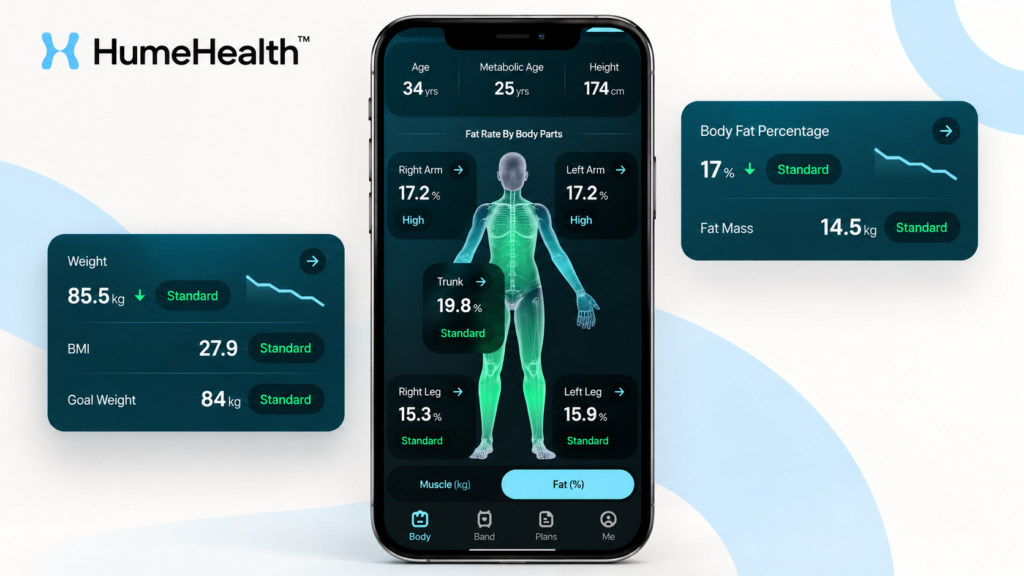
The Body Pod is a smart scale that estimates more than body weight. It uses a hand-held bar as well as foot sensors, then sends measurements to the Hume Health app. The company says it can track more than 40 body-composition and wellness metrics, including body fat, muscle mass, body water and visceral fat.
So what is it actually like to use for a month? In a published hands-on review, Wareable’s reviewer tried the Body Pod for about a month and found that its real value was seeing trends—not treating every individual reading as a definitive result. Here’s what an everyday user might take away from that experience.
Getting started
The first step is setting up the scale and connecting it to the Hume Health app. The Wareable reviewer found the setup straightforward: pair the device over Bluetooth, enter personal details such as height and age, then step onto the scale barefoot and lift the handle during the scan. The measurement takes only a few seconds.
The routine itself is simple, but it works best when you repeat it under similar conditions. For example, weigh yourself at roughly the same time of day and on the same hard, flat surface. Body weight and some composition estimates can shift with food, water and exercise, so comparing a morning reading with one taken after dinner may not tell you much.
It shows more than weight
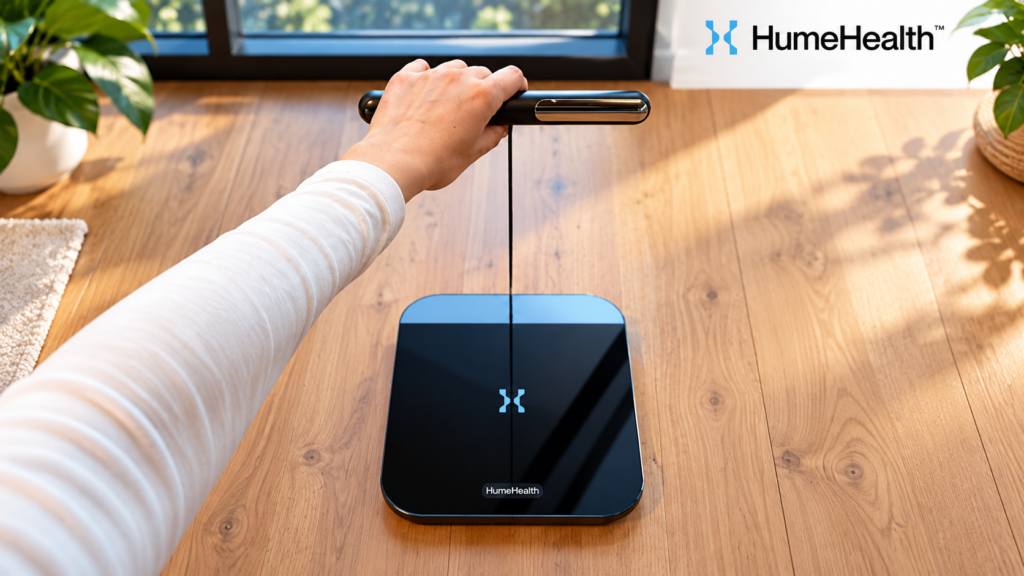
A basic scale gives you one main number. The Body Pod is designed to show a broader picture, with estimates for measurements such as body fat and muscle mass. Its hand-held bar is intended to collect readings from the upper body as well as the feet, while the app displays the results and their trends.
That extra information can be useful if your weight stays about the same while your exercise or eating habits change. You may want to know whether your progress is showing up in other measurements, rather than relying only on the scale. Hume Health also presents metrics such as visceral fat and metabolic age, but these should be treated as estimates and wellness trends, not medical readings or diagnoses.
What changed during the month?
The Wareable reviewer said the most useful change was not a dramatic before-and-after result. After becoming more consistent with gym visits and paying closer attention to diet, they saw small improvements in lean mass and slight reductions in body fat. The reviewer also said it was difficult to know whether individual body-composition numbers were exactly right.
That distinction matters. A month is a short time, and a home device cannot prove that a particular workout or meal caused a change. The more realistic benefit is being able to look back at a series of readings and ask whether the general direction matches your routine.
For a normal user, this can make progress feel less all-or-nothing. If body weight barely moves, that doesn’t automatically mean your effort has had no effect. But one unexpected reading shouldn’t be taken as proof that your body has suddenly changed, either.
The parts that could be frustrating
The experience wasn’t perfect. The reviewer sometimes received an error during a scan and had to start again. They also found that the Hume Health app needed to be open and the phone nearby to access the full set of measurements. Without that, the scale provided basic weight information rather than the complete scan.
That may be a small inconvenience if you already open the app every morning. It could be irritating if you expect a smart scale to record everything automatically in the background. It’s worth considering how you like to track your health before paying extra for a device built around app-based data.
The number of available metrics can also feel like a lot at first. More information is only helpful if you know what you want to do with it. A simple approach is to focus on a few measurements and their longer-term trend instead of checking every score after every scan.
Is it accurate?
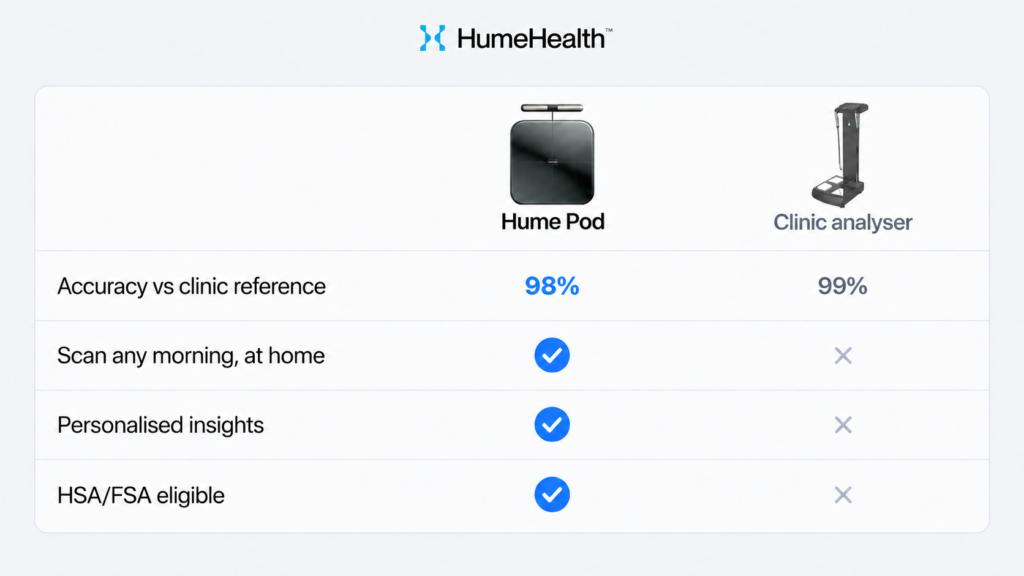
This is the biggest question, and it deserves a careful answer. Hume Health makes accuracy claims on its website, but Wareable’s reviewer did not independently verify the readings against a DEXA scan. They found the weight measurement believable and the broader trends plausible, while noting that they couldn’t confirm every body-composition figure was correct. The review also points out that smart-scale estimates are best used to follow changes over time, rather than as clinically precise measurements.
In practical terms, try to measure under similar conditions and look at the direction over several weeks. If a metric concerns you, or you need an accurate clinical assessment, speak with a health professional rather than relying on a consumer scale.
Is the Hume Health Body Pod worth considering?
The Body Pod makes more sense for someone who genuinely wants to explore body-composition trends than for someone who only wants to know their weight. The Wareable reviewer appreciated the extra information and quick scans, but also mentioned occasional errors, the need to open the app and the challenge of verifying the body-composition measurements.
For an everyday user, the useful question is: will the data help you stay consistent, or will it make you worry about numbers that naturally fluctuate? If you enjoy tracking progress and can treat the results as estimates, the hume Body Pod may offer more context than a basic scale. If you prefer a simple weigh-in, a less expensive scale may be enough.
Final thoughts
After a month, the most meaningful takeaway from the published review was that the Hume Health Body Pod is better viewed as a trend-tracking tool than as a source of perfect daily answers. It can show more than weight, and the app may help make gradual changes easier to notice. But measurements can be frustrating at times, and the device’s body-composition estimates shouldn’t replace medical advice.
For someone trying to build healthier habits, that broader view may be motivating—as long as the numbers support your routine instead of controlling it.